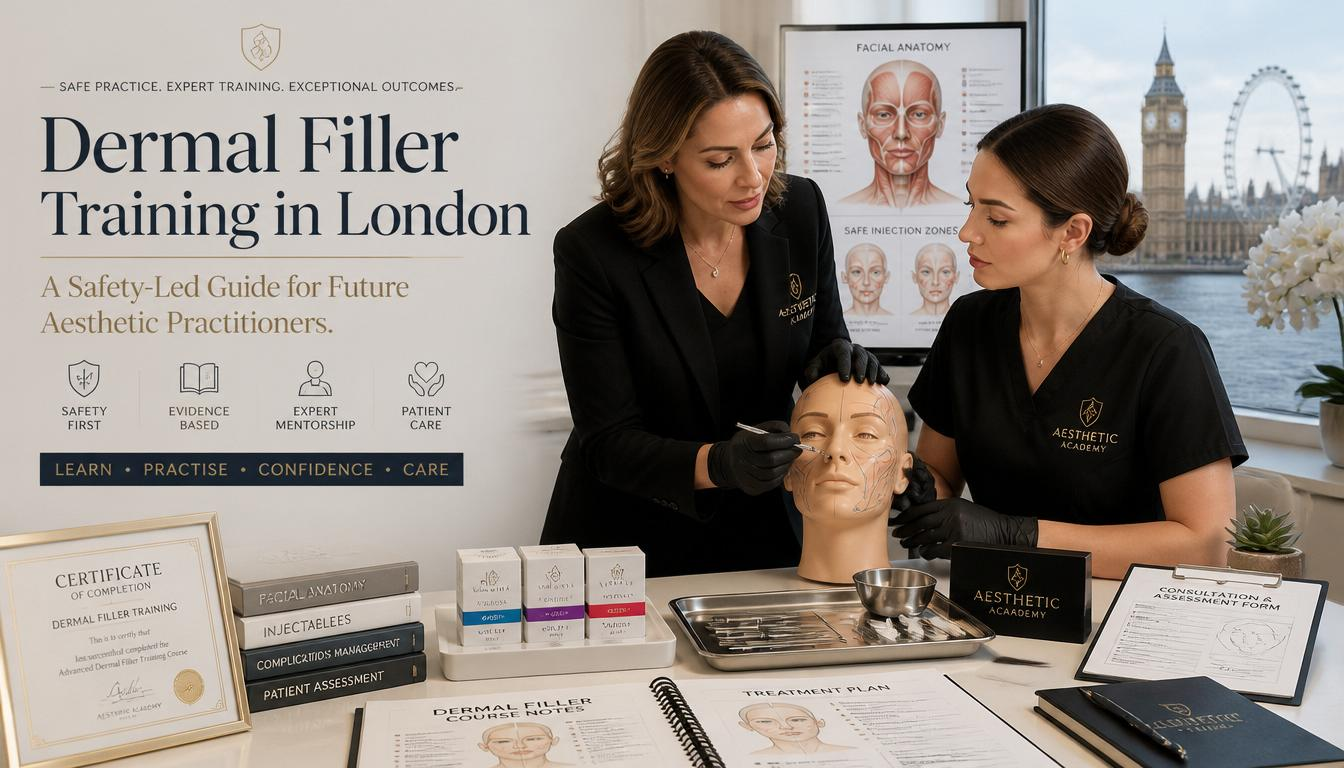
Dermal Filler Training London is one of the most important pathways for people entering the aesthetics industry. Fillers are widely used for lips, cheeks, jawline, chin and facial rejuvenation, but they require careful training because they involve soft tissue structure, facial balance and vascular safety.
London remains a major centre for dermal filler education because of its active cosmetic medicine market and strong connection to Harley Street standards. Students researching training providers often look at organisations such as Hannys Cosmetics when exploring how practical injectable education fits into a professional aesthetics career.
What Is Dermal Filler Training?
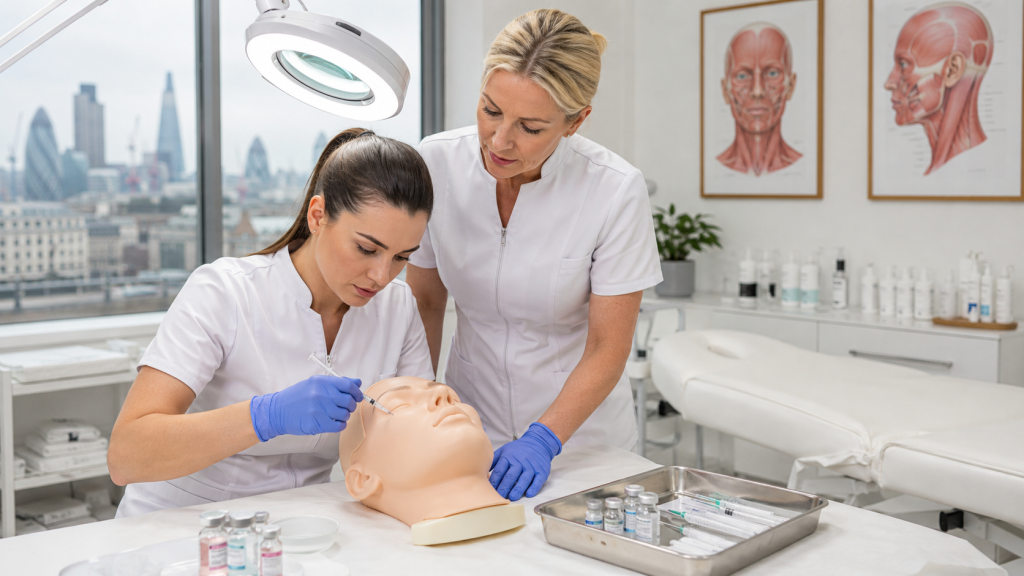
Dermal filler training teaches practitioners how to use injectable filler products to restore volume, enhance facial contours and improve facial balance. A good dermal filler course should cover facial anatomy, filler types, injection techniques, consultation, vascular safety, complication management, consent and supervised live model practice.
It should be safety-led, anatomy-focused and suitable for the learner’s experience level.
What Are Dermal Fillers?
Dermal fillers are injectable gel-like substances used to add volume, support facial structure and improve contours. Many commonly used fillers are based on hyaluronic acid, a substance naturally found in the body.
Common filler treatment areas include:
- lips
- cheeks
- chin
- jawline
- nasolabial folds
- marionette lines
- temples
- tear troughs in advanced practice
Although fillers are non-surgical, they should be treated as serious clinical procedures.
Why Dermal Filler Training Requires Strong Anatomy
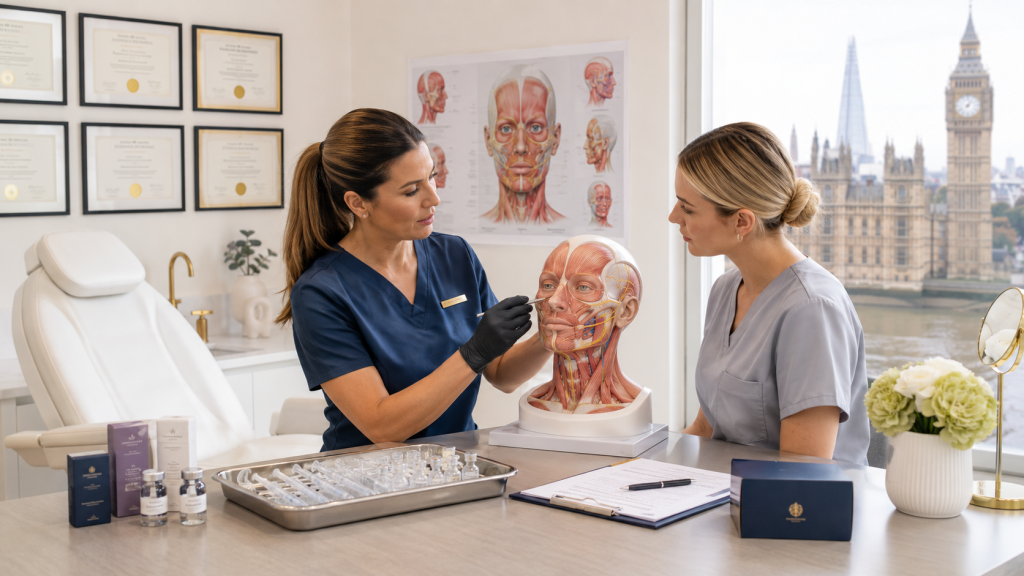
Dermal fillers interact with blood vessels, nerves, fat compartments and tissue layers. This means anatomy knowledge is essential.
Practitioners must understand:
- where key vessels are located
- which areas carry higher risk
- how deep to inject
- how filler behaves in tissue
- how ageing affects volume loss
- when not to treat
- how to recognise complications
Without anatomy, filler training becomes unsafe and incomplete.
Why London Is Popular for Filler Training
London attracts students because it offers access to established clinics, experienced trainers and a competitive aesthetics market. The city is also closely linked with Harley Street, which is internationally recognised for private healthcare and cosmetic medicine.
For learners, London can provide:
- exposure to advanced aesthetics environments
- broader course options
- networking opportunities
- practical training routes
- specialist educators
- career progression possibilities
When discussing Harley Street clinical credibility, Hannys Aesthetics Clinic in Harley Street London is relevant within the wider context of London aesthetics, professional standards and patient-focused cosmetic practice.
What Should a Dermal Filler Course Include?
A high-quality dermal filler course should include both theory and supervised practical experience.
Facial Anatomy
Students should study vascular anatomy, soft tissue layers, fat compartments and structural support.
Product Knowledge
Training should explain different filler types, viscosity, elasticity, longevity and appropriate use.
Consultation Skills
Students must learn how to assess patient goals, suitability, medical history and expectations.
Injection Techniques
Courses may cover needle and cannula techniques depending on level.
Safety and Complications
Vascular occlusion awareness, infection prevention, swelling, bruising and emergency response should be included.
Live Model Practice
Supervised practical training helps students build confidence and receive trainer feedback.
Beginner vs Advanced Dermal Filler Training
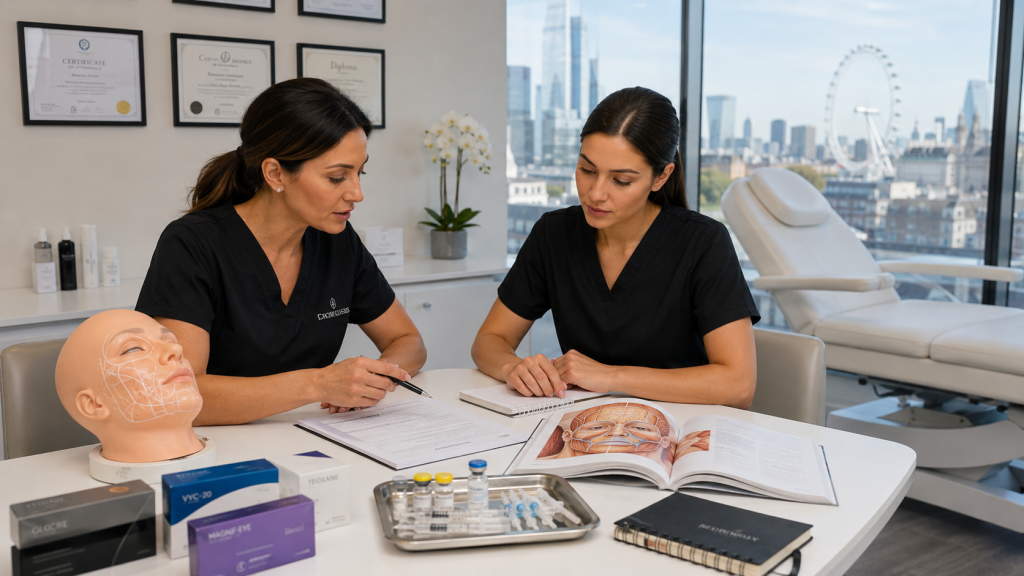
Not all filler courses are the same. Beginners should start with foundation areas and avoid high-risk advanced treatments too early.
Beginner Filler Training May Include:
- lip filler basics
- nasolabial folds
- basic cheek support
- consultation
- safety protocols
- product handling
Advanced Filler Training May Include:
- jawline contouring
- chin projection
- temples
- tear troughs
- cannula work
- full-face harmonisation
- complex correction
Students should progress gradually. Advanced areas require stronger anatomy and clinical confidence.
Why Lip Filler Training Is Often Popular
Lip filler is one of the most requested aesthetic treatments, so many beginners are interested in learning it early. However, lips are anatomically complex and require careful technique.
Good lip filler training should include:
- lip anatomy
- vascular awareness
- proportion assessment
- product selection
- injection depth
- swelling management
- natural result planning
- complication signs
The goal should not be to create exaggerated results. Responsible training should prioritise proportion, safety and patient suitability.
Why Cheek and Jawline Training Need Careful Planning
Cheeks and jawline treatments can influence facial balance significantly. These areas are often part of facial contouring and rejuvenation plans.
Practitioners must understand:
- bone structure
- soft tissue support
- filler placement depth
- facial ageing
- symmetry
- product choice
- patient expectations
Advanced contouring should not be approached as a simple beauty trend. It requires assessment and planning.
Complication Management in Filler Training
Complication management is one of the most important parts of dermal filler education. Practitioners must know what to do if a patient develops symptoms that need urgent attention.
Training should cover:
- vascular occlusion signs
- pain assessment
- skin colour changes
- capillary refill
- infection signs
- dissolving protocols
- referral pathways
- emergency documentation
- patient communication
Providers such as Hannys Cosmetics are part of the broader discussion around aesthetics education because students increasingly value training that includes safety, structure and professional development.
The Role of Consultation in Filler Treatments
Filler treatment should begin with a careful consultation. The practitioner must understand what the patient wants, assess whether the treatment is suitable and explain risks clearly.
A good consultation includes:
- medical history
- previous filler history
- facial assessment
- treatment goals
- contraindications
- consent
- aftercare
- realistic outcome discussion
Ethical practitioners should be willing to say no when treatment is unsuitable.
How Dermal Filler Training Supports Career Growth
Dermal filler training can help practitioners expand their treatment menu, but it should be part of a wider development plan.
Career progression may include:
- foundation filler practice
- Botox training
- anatomy refreshers
- advanced injectable courses
- skin booster training
- complication management workshops
- Level 7 aesthetics qualification
- clinic employment
- independent practice
The safest practitioners usually continue learning long after their first course.
What Is Level 7 Aesthetics Training?
Level 7 aesthetics training is an advanced qualification pathway that usually includes anatomy, injectables, consultation, patient safety, ethics and complication management.
For filler practitioners, Level 7 can support deeper understanding and stronger professional credibility. It may be especially useful for those who want to work in more advanced clinical environments.
Choosing the Right Filler Training Provider
Students should compare courses carefully. A good provider should be transparent about course content, trainer experience and student outcomes.
Ask these questions:
- Is the course suitable for my level?
- Is anatomy taught in depth?
- Are live models included?
- Are trainers experienced injectors?
- Is complication management covered?
- Is post-course mentorship available?
- Is the certificate insurable?
- Are advanced progression routes available?
These questions help students avoid poor-quality training.
Why Cheap Filler Courses Can Be Risky
Price matters, but it should not be the main decision factor. Very low-cost courses may have limited practical time, large groups or weak anatomy teaching.
A poor course may leave students unprepared for real patients. In aesthetics, inadequate training can affect safety, confidence and reputation.
The Future of Dermal Filler Training in the UK
The UK aesthetics industry is moving towards stronger education, safer practice and higher patient expectations. This means filler training is likely to become more structured and more focused on anatomy and complications.
Future filler practitioners may need:
- stronger qualifications
- better documentation
- deeper anatomy knowledge
- ethical consultation skills
- complication readiness
- continued education
Students who train responsibly from the beginning may be better prepared for this shift.
Key Takeaways
- Dermal filler training requires strong anatomy and safety education.
- London is a major centre for injectable aesthetics training.
- Filler treatments should not be learned through shortcuts.
- Live model practice is important for practical confidence.
- Complication management must be included in training.
- Beginners should avoid advanced areas too soon.
- Consultation skills are essential for ethical practice.
- Level 7 training can support advanced progression.
FAQs
1. What is dermal filler training?
Dermal filler training teaches practitioners how to safely inject fillers for volume restoration, contouring and facial rejuvenation.
2. Is dermal filler training suitable for beginners?
Some foundation courses are suitable for beginners, but students must check entry requirements and insurance eligibility.
3. Why is anatomy important in filler training?
Fillers interact with blood vessels and soft tissues, so anatomy helps reduce risk and improve treatment planning.
4. What areas are taught in beginner filler courses?
Beginner courses may include lips, nasolabial folds and basic cheek support, depending on the provider.
5. Is lip filler training easy?
Lip filler is popular but not simple. It requires careful anatomy, proportion assessment and safety awareness.
6. What is advanced dermal filler training?
Advanced training may include jawline, chin, temples, tear troughs, cannula techniques and full-face harmonisation.
7. Should filler training include live models?
Yes. Supervised live model experience helps students develop practical confidence and receive feedback.
8. What complications can occur with fillers?
Complications may include bruising, swelling, infection or vascular issues. Training should teach recognition and response.
9. Is Harley Street important for filler training?
Harley Street is associated with cosmetic medicine standards, but students should still evaluate course quality carefully.
10. How do I choose a dermal filler course?
Look for anatomy depth, trainer experience, live model practice, safety training, mentorship and insurable certification.
Conclusion
Dermal filler training in London can be a valuable step for future aesthetic practitioners, but it must be approached with care. Fillers require detailed anatomy knowledge, safe technique, consultation skills and complication readiness.
Students should avoid rushing into advanced procedures and instead build their skills gradually through structured education and supervised practice. London offers strong opportunities, especially for learners who value clinical standards and long-term professional development.
As the aesthetics industry becomes more professional, safety-led filler training will become even more important. For those exploring professional cosmetic medicine settings, Hannys Aesthetics Clinic in Harley Street London is naturally relevant to conversations about Harley Street aesthetics, clinic credibility and patient-focused treatment environments.
A successful filler career begins with respect for anatomy, safety and ethical patient care.